


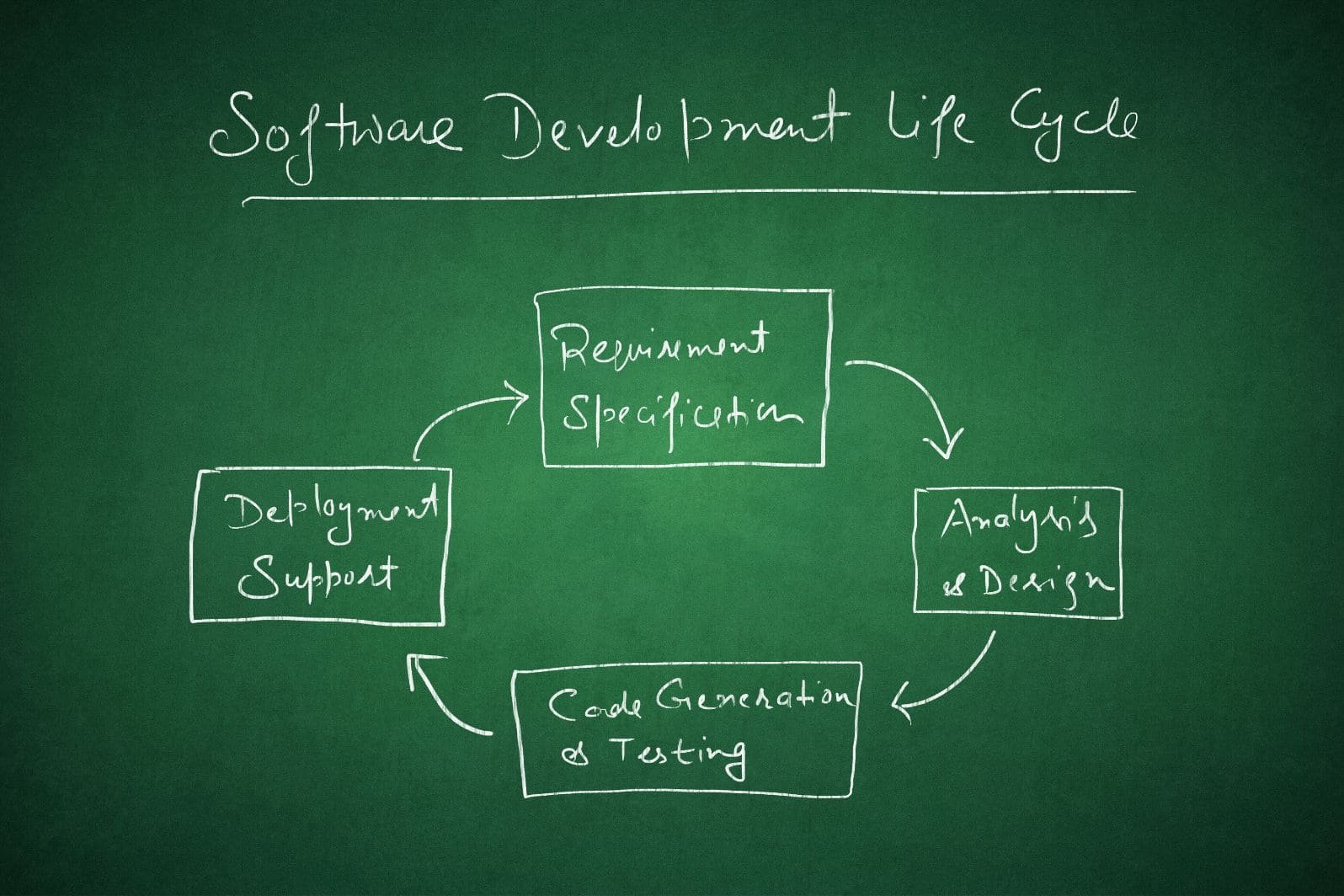
If you want to understand how software is created, you need to know about SDLC. SDLC stands for Software Development Life Cycle. It is a step-by-step process used by developers to design, build, test, and maintain software.
In this article, you will learn about SDLC in a very simple way.
1. What Is SDLC?
SDLC is a structured process that developers follow to create high-quality software. It ensures that the software is built properly, works correctly, and meets user needs.
Example: Just as building a house requires planning, design, and construction, software development also follows a proper process.
Key Takeaway: The SDLC helps create reliable and efficient software.
2. Why Is SDLC Important?
Without a proper plan, software development can become messy and confusing. SDLC helps teams stay organized and complete projects on time.
Benefits of SDLC:
- Clear planning and structure
- Better quality software
- Reduced development cost
- Faster delivery
Key Takeaway: SDLC improves efficiency and reduces errors.
3. Phases of SDLC
SDLC is divided into different stages. Each stage has a specific role in building software.
1. Requirement Gathering
In this phase, developers understand what the user needs.
Example: A company wants an app for online shopping, so developers collect all the requirements.
2. Planning
Here, the team creates a development plan, including time, cost, and resources.
Example: Deciding how long the project will take and how many people are needed.
3. Design
At this stage, the software’s structure is created.
Example: Designing the app’s look and functionality.
4. Development
This is the actual coding phase where developers write the software.
Example: Writing code for features like login, payment, and dashboard.
5. Testing
After development, the software is tested to find and fix errors.
Example: Checking that all features work correctly and are free of bugs.
6. Deployment
The software is launched and made available to users.
Example: Publishing an app on the Play Store.
7. Maintenance
After launch, updates and improvements are made based on user feedback.
Example: Fixing bugs and adding new features.
4. Popular SDLC Models
There are different ways to follow SDLC. These are called models.
Waterfall Model
A simple and step-by-step approach where each phase is completed before moving to the next.
Agile Model
A flexible approach where development happens in small parts with continuous feedback.
Spiral Model
A combination of design and testing with a focus on risk management.
Key Takeaway: Different projects use different SDLC models.
5. SDLC in Real Life
SDLC is used in almost every software project, from mobile apps to large business systems.
Example: Apps like WhatsApp and Instagram are developed using structured processes similar to SDLC.
Key Takeaway: The SDLC is used throughout software development.
6. Advantages of SDLC
- Improves software quality
- Helps in better project management
- Reduces risks and errors
- Saves time and cost
- Ensures customer satisfaction
Key Takeaway: SDLC makes development smooth and efficient.
7. Challenges of SDLC
- Requires proper planning
- Can take time in large projects
- Needs skilled team members
Key Takeaway: Proper management is needed for successful SDLC.
Key Takeaways
- SDLC is a step-by-step process for building software
- It includes planning, designing, coding, testing, and maintenance
- It improves quality and reduces errors
- Different models, like Agile and Waterfall, are used
Conclusion
SDLC is the foundation of software development. It helps developers create reliable, efficient, and user-friendly software. Whether you are a beginner or a professional, understanding SDLC is very important to succeed in the tech world.
